
艺术治疗
适合任何人 | 无需艺术经验 | 线上及线下
For children, young adults, adults, elders, and anyone | No Art Experience Needed | Online & In person

重新发现
艺术创作,无论以何种创造性的方式,都能将潜意识带入意识,无需言语。文字或语言会限制我们的世界或体验。重新发现你的内在,让世界聆听你的声音!

重建
在经过专业培训的艺术治疗师的帮助下,您可以安全地重现您的故事,从过去的创伤或悲伤中走出来,并有机会重建您的故事、您的生活和您自己!

改革
艺术与神经科学是一对强大的组合!科学研究证明,艺术疗法可以重塑神经回路,改变大脑的反应方式,并改变我们对自身和世界的看法。
“艺术能够使悲伤变得美丽,使孤独成为共同的体验,将绝望转化为希望。”
艺术疗法作为一种非语言方式,弥合了情感与语言之间的差距
Art therapy, is not about making art pretty nor attending an art class; it's more like an expressive way without feeling the awkwardness to find the "correct" words. When art therapy is combined with traditional talk therapy, offers a unique and powerful approach to personal growth and healing. This integrative method allows you to express your thoughts and emotions through creative outlets, which can often lead to deeper insights than verbal communication alone. By engaging in artmaking or simply markmaking activities, you can freely explore your feelings in a safe environment, facilitating a more profound understanding of your challenges and experiences without feeling embarrassed to "name" them with words. This combination empowers you to take an active role in your healing journey. The creative process can enhance your self-esteem and foster resilience as you witness your progress and creativity unfold. The synergy of art therapy and talk therapy provides a holistic framework that nurtures emotional and psychological well-being, ultimately leading to more effective coping strategies and personal empowerment.
艺术治疗
适合任何人 | 无需艺术经验 | 线上及线下
 |  |
|---|---|
 |  |
 |  |
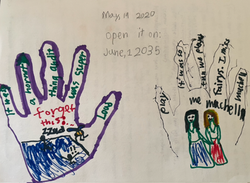
Artworks shared with consent, removed identifiable info or remade, cannot be used without permission.
Populations Benefit the Most from Art Therapy
Generally, we have witnessed the magic power of art therapy help people achieve their therapeutic goals transformatively in sessions, leaving us in awe, speechless, and tearful (the kind of rewarding, fulfilled, and happy tears).
Without vague subjective descriptions of our experiences working with clients, without sharing only our own healing results from art therapy, we want to reveal some research-backed evidence, with numbers and data, to more concretely get a sense of the efficacy and effectiveness of art therapy in real-world therapy sessions.
Multiple peer-reviewed studies and systematic reviews provide strong evidence that art therapy effectively improves emotional and behavioral issues in school-aged children, improving emotional and behavioral health, reducing anxiety, stress, hyperactivity, and boosting self-concept, social skills, and emotional regulation (e.g., PTSD symptoms). Teachers and parents often report positive changes in student conduct and well-being. A systematic review indicates that approximately 78% of college students participating in art therapy reported reduced anxiety, and 83% of participants indicated that artistic activities helped them better express emotions (Kaimal et al., 2022). Meta-analyses and systematic reviews provide strong evidence that art therapy is effective for women in the process of becoming a mother, significantly reducing anxiety, depression, and parenting stress while improving self-esteem, emotional resilience, and parent-infant bonding during the perinatal period and beyond. Many studies indicate that art therapy supports ADHDers, LDers (Learning Disorder), and people on the spectrum of Autism at any age to manage distractibility, enhance executive functioning, regulate emotions, improve social skills, and extend emotional outlets.
This evidence keeps going. People who are suffering from chronic illness, terminal illness (e.g., cancer, etc), dementia, veteran PTSD, depression, anxiety, mood disorders, and people who need clarity on their future, next step in life, or their identity.
It works with anyone open to trying art therapy.
-
Any age:
kids, adolescents, young adults, adults, and elders
-
Any walk of life:
singles, mothers, parents, veterans, high-stress professionals
-
One or more of the following sounds like you:
creative and visual
enjoy non-verbal expression
sensitive to feelings
easy to feel embarrassed
tired of being judged
aren't good at using words
words aren't enough to encapsulate the complexity of experiences
who speaks another language other than English
past therapy didn't work well and not wanting to rely on medication
Referrence
Wu, L., Wang, S., Yang, L. et al. Effects of electroencephalography-based art therapy on emotion regulation difficulties, psychological well-being, relaxation and attention levels among college students. Humanit Soc Sci Commun 12, 1677 (2025). https://doi.org/10.1057/s41599-025-05943-0
Cui, Q., Liu, X., and Li, Z. Systematic review of the effectiveness of arts therapy for children and adolescents with post-traumatic stress disorder. Frontiers Sec. Adolescent and Young Adult Psychiatry, Volume 16 (2025). https://doi.org/10.3389/fpsyt.2025.1716481
Versitano S, Tesson S, Lee CW, Linnell S, Perkes I. Art therapy with children and adolescents experiencing acute or severe mental health conditions: A systematic review. Aust N Z J Psychiatry. 2025 Oct;59(10):863-887. doi: 10.1177/00048674251361731. Epub 2025 Sep 8. PMID: 40916845; PMCID: PMC12460915.
Qian J, Sun S, Wang M, Sun X, Yu X. Art-based interventions for women's mental health in pregnancy and postpartum: A meta-analysis of randomised controlled trials. Front Psychiatry. 2023 Feb 15;14:1112951. doi: 10.3389/fpsyt.2023.1112951. PMID: 36873226; PMCID: PMC9976780.
Heijman J, Wouters H, Schouten KA, Haeyen S. Effectiveness of trauma-focused art therapy (TFAT) for psychological trauma: study protocol of a multiple-baseline single-case experimental design. BMJ Open. 2024 Jan 29;14(1):e081917. doi: 10.1136/bmjopen-2023-081917. PMID: 38286685; PMCID: PMC10826536.
https://www.ldrfa.org/how-art-therapy-helps-people-with-adhd-learning-disabilities-and-autism/